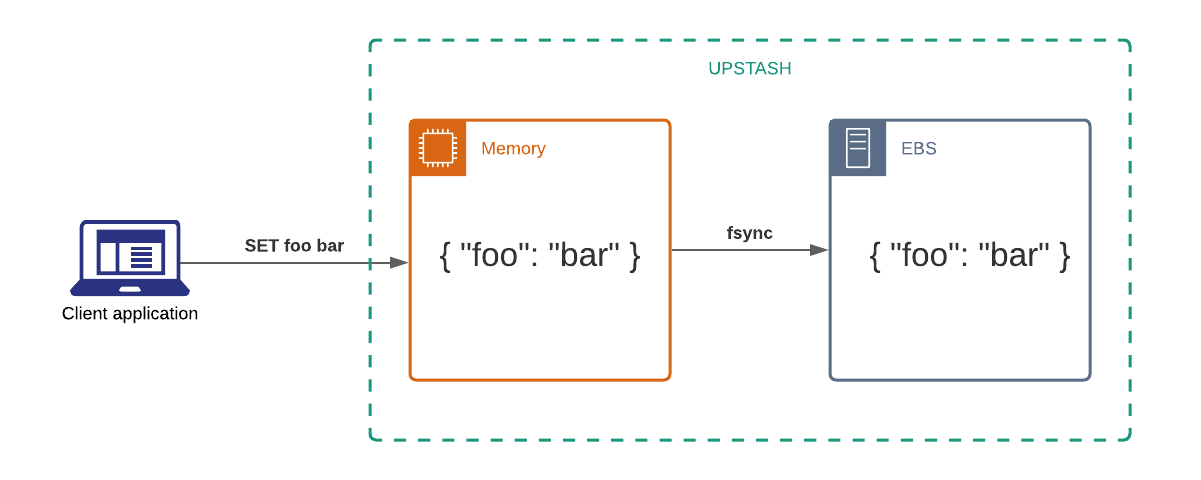
In Upstash, persistence is always enabled, setting it apart from other Redis offerings. Every write operation is consistently stored in both memory and the block storage provided by cloud providers, such as AWS’s EBS. This dual storage approach ensures data durability. Read operations are optimized to first check if the data exists in memory, facilitating faster access. If the data is not in memory, it is retrieved from disk. This combination of memory and disk storage in Upstash guarantees reliable data access and maintains data integrity, even during system restarts or failures.Documentation Index
Fetch the complete documentation index at: https://upstash.com/docs/llms.txt
Use this file to discover all available pages before exploring further.
Multi Tier Storage
Upstash keeps your data both in memory and disk. This design provides:- Data safety with persistent storage
- Low latency with in memory access
- Price flexibility by using memory only for active data
Can I use Upstash as a database?
Definitely, yes. Some users are worried that Redis data will be lost when a
server crashes. This is not the case for Upstash thanks to Durable Storage.
Data is reloaded to memory from block storage in case of a server crash.
Moreover, except for the free tier, all paid tier databases provide extra redundancy by replicating data to multiple instances.